CoRe Alliance Calls for Phased EPR Framework, Hands Over 5,000 Reusable Bags to Pak-EPA
The alliance urged stronger recycling systems, greater industry involvement and better waste management at a policy session in Islamabad.
The Collect & Recycle (CoRe) Alliance has called for a phased and inclusive Extended Producer Responsibility (EPR) framework to improve Pakistan’s waste management and recycling systems.
The call came during a policy session at the 29th Sustainable Development Conference in Islamabad. The session was titled “From Policy to Practice: Strengthening Extended Producer Responsibility (EPR) for Better Systems in Pakistan.”
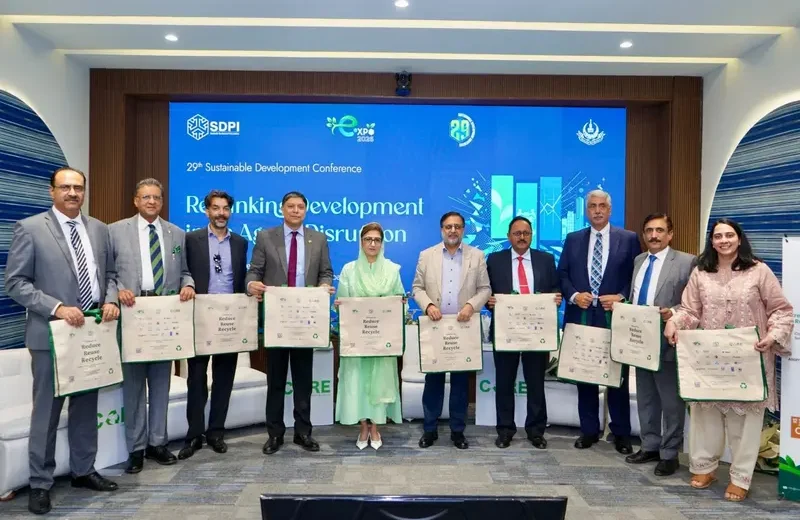
The alliance also handed over 5,000 reusable tote bags to the Pakistan Environmental Protection Agency (Pak-EPA). The co-branded bags aim to encourage people to use alternatives to single-use plastic bags. The initiative also supports the Single-Use Plastics (Prohibition) Regulations, 2023, in the Islamabad Capital Territory.
Dr Shezra Mansab Ali Khan Kharal, Minister of State for Climate Change and Environmental Coordination, delivered the opening remarks. She said Pakistan needed joint efforts from the government and industry to build a circular economy.
She added that effective EPR implementation could improve waste collection, strengthen recycling and promote the responsible use of resources.
CoRe Alliance CEO Sheikh Waqar Ahmad said Pakistan needed practical action alongside supportive policies. He called for greater industry involvement, tax incentives and easier access to finance. These steps, he said, could attract private investment in recycling facilities.
He also said the reusable bag initiative reflected the alliance’s commitment to responsible consumption and sustainable packaging.
Amir Mohyuddin, Additional Secretary at the Ministry of Climate Change and Environmental Coordination, also addressed the session.
The panel discussion featured three industry and policy experts. They included Zainab Naeem, Research Fellow at the Sustainable Development Policy Institute (SDPI); Babar Aziz Bhatti, CEO of Green Earth Recycling and Chairperson of CoRe Alliance’s EPR Committee; and Zia Hyder, CEO of SPEL Group and Board Director of CoRe Alliance.
The panel discussed several ways to improve Pakistan’s recycling system. Key topics included phased EPR targets, shared responsibilities among businesses, green financing and digital tracking of recyclable materials.
Participants also called for stronger regulatory oversight of industry-led Producer Responsibility Organisations (PROs). They stressed the need to include informal waste workers in the recycling system.
Babar Aziz Bhatti highlighted the potential of Pakistan’s recycling industry. He said the sector could process large volumes of recyclable materials. However, he stressed that proper waste sorting was essential. It could reduce processing costs and improve the quality of recycled products.
The handover of 5,000 reusable bags was another key part of the initiative. CoRe Alliance and Pak-EPA organised the activity to promote reusable alternatives and reduce the use of single-use plastics.
The event brought together government officials, industry representatives and development partners. They discussed practical ways to improve waste management and expand recycling facilities across Pakistan.
The 29th Sustainable Development Conference was organised by the Sustainable Development Policy Institute (SDPI) in collaboration with CoRe Alliance at Allama Iqbal Open University in Islamabad.
The initiative highlights the need for stronger producer responsibility, greater investment in recycling and closer cooperation between the government and the private sector. These efforts can help Pakistan build a more effective and sustainable waste management system.
RELATED STORIES