Pakistan Students Score 38% in Mathematics and 47% in Science, Nationwide Study Finds
KARACHI: Students in Pakistan scored an average of 38 per cent in mathematics and 47 per cent in science, according to a nationwide study presented at the Aga Khan University (AKU). Researchers say the findings highlight the need to improve classroom teaching and strengthen teachers’ professional development.
The results were shared through the Science and Mathematics Instruction and Learning Outcomes study at the closing ceremony of the Data and Research in Education – Research Consortium (DARE-RC), a three-and-a-half-year research programme funded by UK International Development.
The study was presented by AKU’s Institute for Educational Development (IED), alongside its research partners. It examined students’ learning outcomes and added to a wider body of research on challenges facing Pakistan’s education sector.
Researchers stressed that the reported scores reflect learning among children who are enrolled in schools. The findings do not cover the millions of children who remain outside the education system. According to the federal education ministry’s Pakistan Education Statistics Report 2023-24, around 25 million children in the country are out of school.
The consortium also presented research on the educational challenges faced by religious minority students and children with disabilities. Other areas included frontline teaching, climate-resilient schools, education data governance and the opportunities and quality concerns associated with public-private partnerships.
Dr Farid Panjwani, Dean of AKU’s Institute for Educational Development, said the consortium gave researchers the opportunity to develop their own research ideas. He described this approach as one of the programme’s strengths and said it should be adopted more widely.
He also highlighted the establishment of the Dean’s Forum, saying the platform would help keep academic research connected to national education reform priorities after the consortium concludes.
The new forum will bring together deans and heads of education departments from universities across Pakistan. It aims to support research-based policy discussions, encourage collaboration and help advance shared priorities for education reform.
DARE-RC was led by Oxford Policy Management in partnership with AKU’s Institute for Educational Development and Sightsavers International. The programme brought together local and international researchers to develop solutions for Pakistan’s education challenges and connect national research with global education policy discussions.
Its work covered four priority areas, supported by two cross-cutting themes: effective data use and scalable solutions. The programme aimed to strengthen the quality of research and increase the practical impact of its findings.
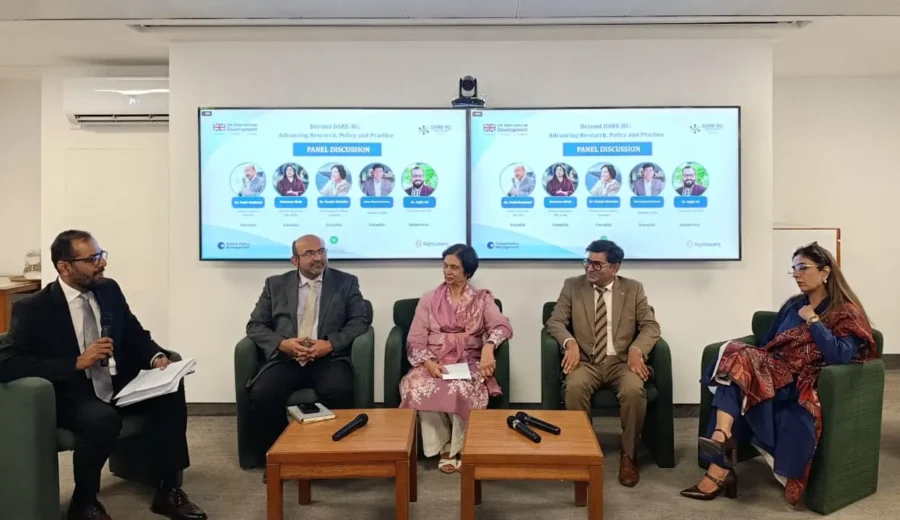
A panel discussion titled Sustaining Research Impact Beyond DARE-RC brought together education experts and policymakers to discuss how research findings could translate into lasting reforms. Moderated by Dr Sajid Ali, the session featured Dr Farid Panjwani and Dr Dilshad Ashraf of AKU-IED, Prem Sagar of the Ministry of Education, Memona Shah of the Sindh Higher Education Commission and Dr Fauzia Shamim of Durbeen.
The panellists discussed ways to strengthen institutional ownership, accelerate the adoption of research findings in policymaking and sustain education reforms beyond the programme’s completion.
A Research Gallery Walk was also held alongside the sessions, showcasing studies on climate-resilient schooling, education data governance and standards for frontline teaching.
The consortium’s closing event highlighted the importance of using research to address Pakistan’s learning challenges, improve education quality and ensure that policy decisions are informed by evidence.
RELATED STORIES