
Beko Highlights Energy-Efficient Cooling Solutions at COP31 in Pakistan Climate Discussion
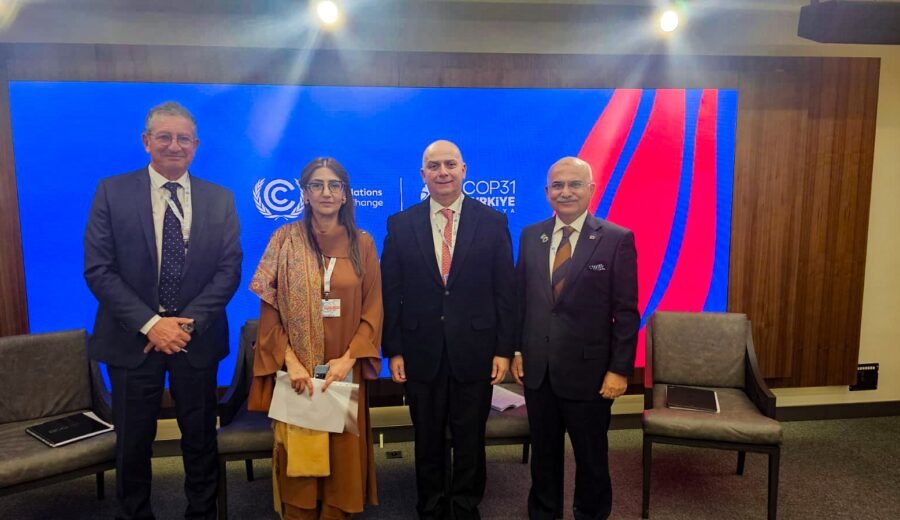
The discussion brought together Pakistan’s climate leadership and industry representatives to explore affordable cooling, energy efficiency and sustainable technologies.
Beko has brought together Pakistan’s climate leadership and industry representatives at COP31 to discuss how affordable, energy-efficient cooling solutions can support the energy transition in emerging markets.
The panel discussion, titled “Cooling a Warming World: Energy Access and Climate Change in Emerging Markets”, was held at the Türkiye Pavilion in the Blue Zone in Antalya.
The session featured Dr Shezra Mansab Ali Khan Kharal, Pakistan’s Minister of State for Climate Change and Environmental Coordination; Can Dinçer, CEO of Beko; and Umar Ahsan Khan, CEO of Dawlance. Michel Frédeau, Senior Advisor and Global Leader of Boston Consulting Group’s Climate and Environment Impact Area, moderated the discussion.
The speakers focused on the growing demand for cooling in developing economies. They also discussed ways to make energy-efficient appliances more affordable and accessible while reducing electricity consumption.
Can Dinçer highlighted the rapid growth in cooling demand in countries such as Pakistan and South Africa. He noted that energy-efficiency standards in these markets are still developing.
He stressed the importance of making efficient appliances available to consumers before regulations make their adoption mandatory.
Dawlance, Beko’s local subsidiary, is working to improve appliance affordability through local research, manufacturing and technology transfer from Türkiye-based Arçelik.
Its product development includes inverter refrigerators and air conditioners designed for local conditions. These appliances can operate in low-voltage environments and are compatible with solar systems, UPS units and generators.
Umar Ahsan Khan highlighted Pakistan’s fan replacement programme as a potential model for upgrading other household appliances. The programme allows eligible consumers to purchase energy-efficient fans through instalments added to their electricity bills.
He suggested introducing a similar financing model for refrigerators and air conditioners. This would allow households to replace older appliances with energy-efficient alternatives and spread the cost over time.
Dawlance is also working with the National Energy Efficiency and Conservation Authority (NEECA), the Pakistan Standards and Quality Control Authority (PSQCA), the United Nations Industrial Development Organisation (UNIDO) and the Ministry of Climate Change and Environmental Coordination.
These partnerships aim to make efficient appliances more affordable, strengthen energy-efficiency standards and raise consumer awareness about electricity savings.
The company added that reducing energy consumption throughout the life of its appliances also helps lower its Scope 3 emissions. These emissions cover indirect environmental impacts across its value chain.
As part of its sustainability efforts, Dawlance has also replaced conventional insulation foam in its refrigerators and freezers with cyclopentane, which has zero ozone-depleting potential.
The transition was supported by UNIDO and the Ministry’s National Ozone Unit. Federal Secretary for Climate Change Awais Manzur Sumra visited Dawlance’s Karachi plant in September to review the development.
Beko’s COP31 programme will continue through Koç Holding’s “From Commitments to Action” initiative at the Koç Holding Pavilion in the Green Zone.
Company executives are expected to participate in discussions on industrial competitiveness, Türkiye-Europe value chains, climate and trade policy alignment, and financing for low-carbon investments.
Koç Holding and Beko reaffirmed their commitment to supporting Pakistan’s industrial and economic development through innovation, local manufacturing and technologies that improve household living standards.
The companies also highlighted the growing economic relationship between Türkiye and Pakistan. Bilateral trade reached approximately $1.2 billion in 2025, while both governments have set a target of increasing trade to $5 billion.
RELATED STORIES