The Biz Update One of Pakistan's Most Reliable Business News Website
Related Articles



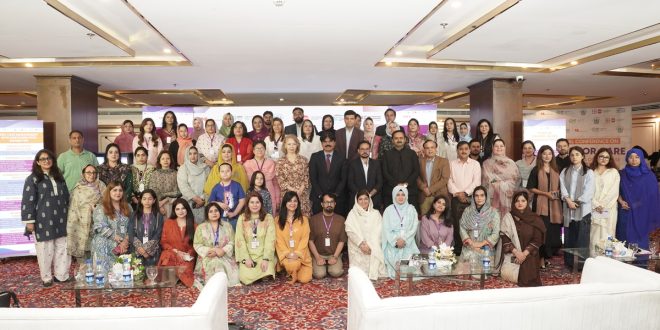
ISLAMABAD, June 24, 2026: Pakistan’s first national conference on gender-based violence (GBV) case management, titled “Connected for Care,” concluded in Islamabad with a strong call for institutional reforms, mentorship systems, and sustainable survivor-centered support mechanisms.
The Ministry of Human Rights organized the two-day conference with technical support from the Strengthening Participatory Organization (SPO) and UNFPA Pakistan. The initiative also received funding from the UK Foreign, Commonwealth and Development Office (FCDO) and the Embassy of the Netherlands.
The first day highlighted the scale of GBV in Pakistan. Speakers from the Ministry of Human Rights, UNFPA, and SPO noted that nearly one in three ever-married women in Pakistan has experienced violence. They also pointed to persistent gaps in investigations, referrals, and case management that continue to deny survivors timely support and justice.
On the second day, participants focused on practical solutions. They discussed ways to institutionalize GBV case management and strengthen survivor-centered services nationwide.
UNFPA Pakistan consultant Mehreen Jaswal highlighted the challenges faced by married adolescent girls. She said many fall outside both child protection and GBV support systems. As a result, they often remain trapped in cycles of violence for years before seeking help. She urged policymakers to bridge this gap through better awareness, coordinated services, and stronger survivor-focused interventions.
Meanwhile, a panel moderated by UNFPA’s KP Head Mahjabeen Qazi explored ways to integrate GBV case management into university curricula and professional training programs. Participants cited Punjab and Khyber Pakhtunkhwa as leading examples of curriculum integration. They also emphasized the need for continuous mentoring, disability-inclusive services, and language support for non-Urdu-speaking survivors.
In another session, clinical psychologist Dr. Zehra Kamal stressed the importance of structured mentorship and supervision. She described supervision as a critical tool for maintaining ethical standards, supporting frontline workers, and preventing secondary trauma. However, participants identified staff burnout, heavy workloads, and the absence of formal systems as major barriers.
A key outcome of the conference was the creation of a National GBV Case Management Mentorship Forum. The platform will connect certified trainers from all provinces and Islamabad for peer learning, supervision, knowledge sharing, and coordinated advocacy.
In their closing remarks, Balochistan Women Development Department Secretary Saira Atta and Ministry of Human Rights Director Arif Leghari reaffirmed their commitment to strengthening GBV prevention and response efforts. They stressed the importance of equipping case workers with survivor-centered skills, legal knowledge, documentation expertise, and referral management capabilities.
They also called for stronger collaboration among government institutions, civil society organizations, and development partners. Furthermore, they emphasized the need to embed GBV case management into government systems, standard operating procedures, and academic curricula to ensure long-term impact.
The “Connected for Care” conference concluded with a shared commitment to building stronger institutional, mentorship, and support structures for survivors across Pakistan.