The Biz Update One of Pakistan's Most Reliable Business News Website

Related Articles
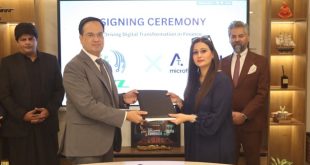
KARACHI, February 16, 2026: The Citizens Archive of Pakistan (CAP) and Aga Khan University (AKU) have signed a Memorandum of Understanding (MoU) to collaborate on the upgradation of the National Museum of Pakistan, one of the country’s principal institutions dedicated to preserving cultural, historical, and artistic heritage.
The MoU signing ceremony, held in Karachi on February 16, 2026, formalised a collaborative framework aimed at strengthening the museum’s infrastructure, exhibition design, visitor engagement, and educational outreach.
Representing CAP at the ceremony were Patron-in-Chief Sharmeen Obaid-Chinoy, President Ahsan Najmi, Vice President Jahanzeb Awan, Board Member Reema Gani, former President and Co-founder Amean Jan, heritage architect and researcher Marvi Mazhar, and artist and curator Sophia Balagamwala. AKU was represented by senior leadership and faculty members, including Vice Provost Anjum Halai.
Established in 1950 and located in Karachi, the National Museum of Pakistan serves as a key repository of the nation’s shared history. With evolving global museum practices, the collaboration aims to enhance the museum’s physical spaces, curatorial approaches, and public programming in line with contemporary international standards.
Under the MoU, AKU will provide technical guidance and institutional coordination for the upgradation process, drawing on its academic and research expertise. CAP will contribute its experience in exhibition development, oral history documentation, archival research, and community engagement initiatives.
The initiative is being undertaken with the support of the federal government’s National Heritage and Culture Division and seeks to strengthen the museum’s role as a dynamic cultural and educational space.
Speaking on the occasion, Sharmeen Obaid-Chinoy said the National Museum of Pakistan has the potential to evolve into a “living, breathing space” that actively engages citizens, particularly young people, in understanding their shared past. She emphasized that museums should spark curiosity, encourage critical thinking, and create opportunities for dialogue, adding that the collaboration aims to transform the museum into a space where people connect with history and feel inspired to shape their future.
Ahsan Najmi noted that CAP has long been committed to documenting and amplifying lived experiences that shape Pakistan’s national story. He said the organization would bring its expertise in oral history, participatory storytelling, and community engagement to help create a museum experience that is accessible, inclusive, and reflective of the country’s diverse voices.
The partnership marks a significant step toward revitalizing one of Pakistan’s most important cultural institutions and positioning it as a vibrant hub for learning, research, and public engagement.