 The Biz Update One of Pakistan's Most Reliable Business News Website
Related Articles



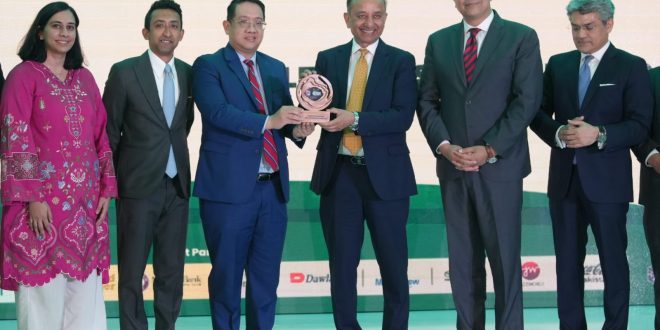
KARACHI: Nestlé Pakistan has been recognized for its impactful initiatives in climate action, regenerative agriculture, and circular economy, winning the prestigious Climate Champion Award at the 4th Pakistan Climate Conference for the second year in a row.
The award was presented during the 2nd Climate Excellence Awards organized by the Overseas Investors Chamber of Commerce & Industry (OICCI)—representing over 200 multinational companies across 14 sectors from 30 countries. This year, more than 80 entries competed for recognition.
Addressing the conference, Federal Minister for Climate Change, Dr. Musadik Masood Malik, emphasized the need to mobilize investment and leverage innovative solutions led by the youth to drive Pakistan’s transition towards climate-resilient development. “We need to place bets on these young starry-eyed people because they are the future of Pakistan, and they will lead us out of these climate challenges,” he said.
Federal Minister for Finance & Revenue, Senator Muhammad Aurangzeb, highlighted the private sector’s crucial role in sustainability, noting that Pakistan has access to $1.3 billion in climate financing from the IMF, World Bank, and Asian Development Bank to address climate challenges.
Jason Avanceña, CEO of Nestlé Pakistan, highlighted Nestlé’s continued investment in the country’s green initiatives, stating, “Building on USD 40 million invested between 2023–2025, Nestlé plans an additional USD 60 million in sustainability, green projects, agricultural transformation, automation, and digitalization, totaling USD 100 million over six years a testament to our long-term commitment to Pakistan.”
Sheikh Waqar Ahmad, Head of Corporate Affairs & Sustainability at Nestlé Pakistan, added, “We are committed to being a force for good, embedding sustainability at the core of our business, and contributing to a cleaner environment and sustainable future.”
Under Nestlé’s global Net Zero commitments, the company aims to reduce greenhouse gas emissions by 50% by 2030 and achieve Net Zero by 2050. Locally, Nestlé Pakistan has already cut over 50% of its emissions (vs 2018) through investments such as 9.6MW solar power and a 20-ton-per-hour biomass boiler at Kabirwala, while reducing virgin plastic use by 33% and introducing recyclable packaging.
Additionally, the company supports collection and recycling of 11,000 tons of packaging waste through its Clean Gilgit-Baltistan Project, aligning with the UN Sustainable Development Goals (SDGs) 13 and 15.
Analysis: Nestlé Pakistan’s consecutive win underscores the growing importance of corporate responsibility in climate action. It demonstrates how multinational companies can integrate sustainability into core operations, while also highlighting the role of government-private partnerships in scaling green solutions. Pakistan’s climate transition will depend not only on policy and financing but also on proactive corporate engagement, innovation, and investments like those by Nestlé.

