The Biz Update One of Pakistan's Most Reliable Business News Website

Related Articles



Move seen as key step toward formalizing Pakistan’s digital asset ecosystem and boosting remittances
KARACHI, April 28, 2026): The Exchange Companies Association of Pakistan (ECAP) has sought the inclusion of exchange companies under the licensing framework of the Pakistan Crypto Council, as part of broader efforts to formalize and expand the country’s digital financial ecosystem.
Meeting with Crypto Council leadership
The demand was made during a meeting between an ECAP delegation led by Chairman Malik Muhammad Bostan and Pakistan Crypto Council CEO and Chairman of the Pakistan Virtual Assets Regulatory Authority (PVARA) Bilal Bin Saqib. The delegation included President Zafar Paracha, General Secretary Sheikh Sajid Hussain, Senior Vice President Syed Zohair and other members.
Regulatory progress welcomed
During the meeting, ECAP representatives appreciated the establishment of the Pakistan Crypto Council, terming it a significant milestone in bringing digital assets into a regulated framework. They noted that institutions such as the State Bank of Pakistan and the Securities and Exchange Commission of Pakistan have advised stakeholders to obtain a no-objection certificate (NOC) from the council before opening bank accounts for crypto-related activities.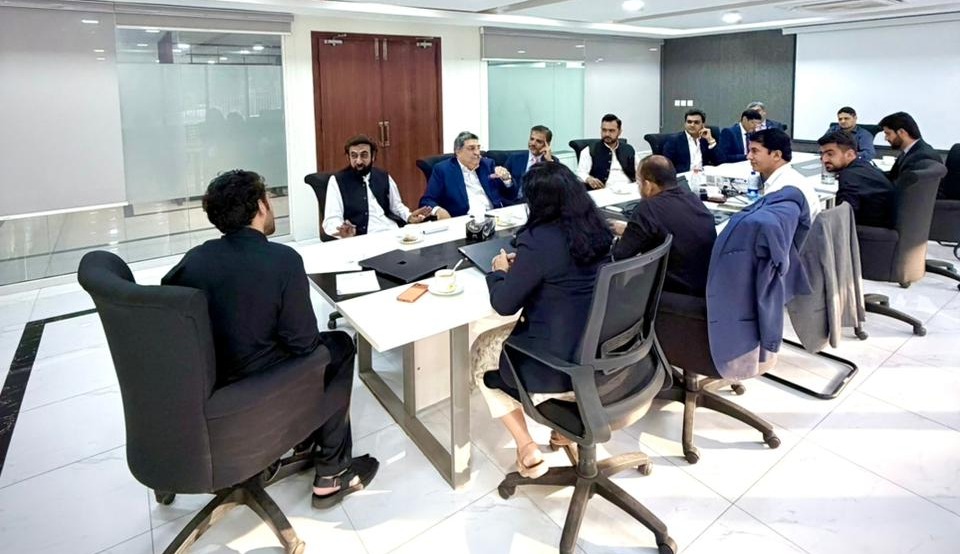
Focus on remittances and efficiency
Malik Bostan said the initiative reflects a forward-looking vision aligned with the growing importance of digital finance. He highlighted that improved systems under the crypto framework could help increase inward remittances by enabling overseas Pakistanis to transfer funds more quickly and at lower cost.
He noted that remittances, which currently take three to four days to reach beneficiaries, could be processed within minutes if stablecoin mechanisms linked to the Pakistani rupee and US dollar are introduced under a regulated structure.
Lower transaction costs expected
Bostan added that around 40 million Pakistanis are already engaged in crypto trading, often paying transaction costs of 5 to 6 percent. With legalization and the introduction of digital licensing, these costs could be reduced to around 1 percent, while ensuring faster and more transparent transactions.
Remittance target and compliance framework
He further said Pakistan’s annual remittances, currently estimated at about $38 billion, could be increased to $50 billion with the help of streamlined digital channels. Officials informed the meeting that regulatory frameworks are being developed in line with international standards, including FATF guidelines and customer due diligence (CDD) requirements, to ensure transparency.
Phased inclusion of exchange companies
Responding to ECAP’s request, Bilal Bin Saqib said that in the first phase, interested entities can enter the sector by obtaining NOCs from the Crypto Council, with full institutional support. He added that exchange companies are expected to be brought into the framework in the second phase, with efforts underway to operationalize transactions at the earliest so that the benefits of digital finance can reach the wider public.