The Biz Update One of Pakistan's Most Reliable Business News Website
Related Articles

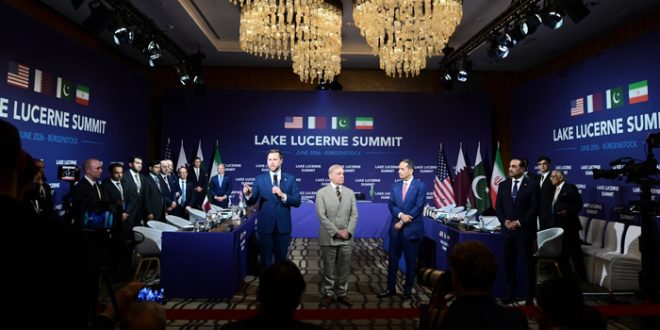
KARACHI:June 22,2026 : Sometimes history changes quietly. There are no missiles, no warplanes, and no victory parades. Instead, a few leaders gather around a table, exchange words, and begin to alter the course of events. The recent diplomatic engagement at Switzerland’s Bürgenstock may appear routine today. However, history may remember it as a turning point.
For years, Pakistan largely remained an observer in global power politics. Major decisions were made elsewhere, and Islamabad dealt with the consequences. This time, however, the picture looked different. Pakistan was not merely present. Instead, it emerged as a country trying to bridge differences between rival powers.
The presence of Prime Minister Shehbaz Sharif and Field Marshal Asim Munir gave the process added significance. In diplomacy, meaningful meetings rarely happen by chance. When countries such as Iran and the United States engage in the same diplomatic process, they usually build on months, or even years, of behind-the-scenes efforts. Above all, such engagement requires trust, and Pakistan appears to have earned it.
Similarly, U.S. Vice President J.D. Vance’s warm interaction with Pakistan’s leadership attracted attention. His remark, “We love Pakistan,” carried diplomatic weight beyond its few words. Only a few years ago, Pakistan often faced skepticism in international discussions. Today, however, some global powers increasingly view it as a potential facilitator of peace.
Moreover, the presence of U.S. Special Envoy Steve Witkoff and former senior adviser Jared Kushner suggested that Washington viewed the engagement as more than a routine meeting. At the same time, Iranian Foreign Minister Abbas Araghchi and Parliament Speaker Mohammad Bagher Ghalibaf demonstrated Tehran’s interest in the process.
Yet the real story goes beyond who met whom. Instead, it centers on where the region is heading. For decades, the Middle East has witnessed repeated conflicts, from Lebanon and Gaza to Syria and Yemen. Therefore, any initiative that lowers tensions, promotes dialogue, and builds trust deserves attention.
Reports indicate that Pakistan and Qatar proposed a 60-day diplomatic roadmap. The framework reportedly includes a high-level oversight committee, technical negotiations, mechanisms for safe navigation through the Strait of Hormuz, and several working groups. While these may sound like routine diplomatic measures, they could lay the foundation for broader regional stability.
The Strait of Hormuz remains one of the world’s most strategic waterways. A significant share of global energy supplies passes through it. Consequently, greater stability there benefits not only the region but also the global economy. Expectations of diplomatic progress have already contributed to lower oil prices.
For Pakistan, the potential economic gains are even greater. If regional tensions ease, energy cooperation with Iran expands, and stalled projects move forward, Pakistan could strengthen its energy security and support long-term economic growth.
Meanwhile, positive remarks from UK Minister Hamish Falconer and Swiss Federal Councillor Ignazio Cassis also deserve attention. In international diplomacy, public appreciation rarely comes without purpose. Instead, it often signals growing confidence in a country’s role.
At the same time, global influence is changing. Military strength and economic power remain important. However, countries that can build trust, prevent conflict, and bring rivals to the negotiating table now carry increasing diplomatic weight. If Pakistan continues along this path, it could mark a significant shift in its foreign policy.
Still, caution remains essential. Diplomatic success depends on results, not headlines. The coming weeks will show whether negotiations produce lasting agreements and whether the region moves closer to peace.
Even so, Bürgenstock may already have strengthened Pakistan’s diplomatic standing. For perhaps the first time in years, Islamabad has entered global discussions not because of a crisis but because of its potential role in resolving one.
If this momentum continues, historians may one day record that, at a critical moment in the 21st century, Pakistan chose dialogue over division and peace over conflict. That would be one of the country’s most significant diplomatic achievements.