The Biz Update One of Pakistan's Most Reliable Business News Website
Related Articles


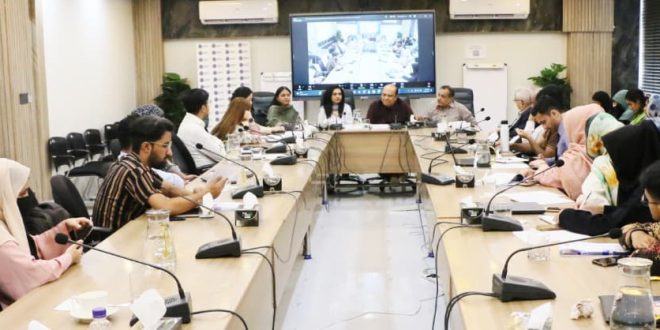
ISLAMABAD, August 10, 2026: Experts, policymakers and researchers have called for urgent reforms in Pakistan’s population policies as the country’s population crosses 240 million and its median age remains just 19 years.
They made the call at a seminar titled “Population Growth and Policy Coherence in Pakistan: Challenges and Pathways”, organized by the Sustainable Development Policy Institute (SDPI) on Monday.
The discussion focused on institutional gaps, regional implementation challenges and community-level factors shaping Pakistan’s population policies.
Prof. Dr. Shezad Ali Khan, Executive Director of the Health Services Academy, delivered the keynote address. He said Pakistan’s population challenges require a broader approach that goes beyond healthcare.
Dr. Khan said an estimated 48% of pregnancies in Pakistan are unwanted, contributing to around 380,000 abortions annually. He noted that many procedures take place in unsafe and unregulated clinics, often leading to serious complications and sepsis.
He also highlighted Pakistan’s maternal and infant health challenges. According to him, the country records around 700,000 stillbirths annually, the highest number globally. He added that around 42 out of every 1,000 newborns die during their first month, giving Pakistan one of the world’s highest neonatal mortality rates.
Dr. Khan said around 20% of couples face unmet family planning needs because of shortages in resources and services. He stressed that the problem reflects systemic weaknesses rather than a lack of willingness among communities.
He called for a locally relevant population policy narrative focused on population welfare. He also emphasized maternal nutrition and birth spacing through breastfeeding, noting that only around 33% of mothers currently breastfeed.
Dr. Khan said non-breastfed infants face significantly higher risks of death from diarrhoea and pneumonia. Therefore, he called for closer coordination between healthcare, education and economic planning.
Meanwhile, Rabia Zafar of the National Institute of Population Studies (NIPS) highlighted gaps in long-term financing, regional coordination and implementation. She urged policymakers to replace reactive planning with long-term, data-based frameworks.
She said Pakistan could benefit from its demographic window by investing in human capital, healthcare and skills development.
Farah Ashraf of the United Nations Population Fund (UNFPA) stressed the need to end fragmented policymaking among government departments. She called for unified data systems, stronger federal-provincial coordination and budgets aligned with long-term demographic trends.
Dr. Shafqat Munir, Deputy Executive Director (Policy) at SDPI, said Pakistan currently has around 57 million women of reproductive age, a figure projected to exceed 100 million by 2050.
He added that Pakistan’s working-age population could increase from 164 million to 292 million during the same period. The youth cohort currently accounts for around 67% of the population, creating both an opportunity and a policy challenge.
Dr. Munir said Pakistan’s main problem is not a shortage of policy statements. Instead, the country faces inadequate long-term financing, unequal regional access and weak coordination between government departments.
Concluding the seminar, Dr. Munir reaffirmed SDPI’s commitment to evidence-based and multi-sectoral policy dialogue. He stressed that Pakistan must now move “from dialogue to implementation” to address its demographic challenges.
The seminar formed part of SDPI’s ongoing research and policy work on population and development in Pakistan.