The Biz Update One of Pakistan's Most Reliable Business News Website
Related Articles



KARACHI, Aug. 4, 2026: Pakistan’s consumer inflation eased to 9.2% year-on-year in July 2026, returning to single-digit levels after three months, although higher food prices pushed monthly inflation up 1.2%, according to the latest economic review.
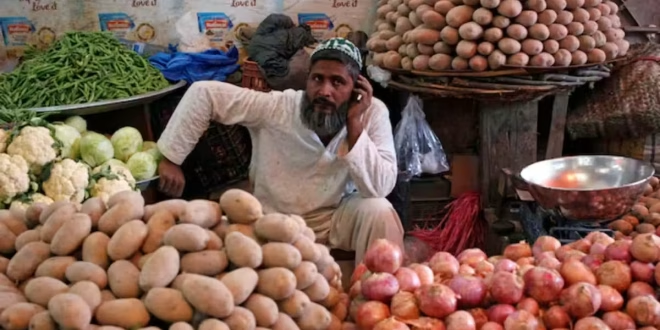
Food prices remained the biggest driver of inflation, rising 10.6% year-on-year and 4.2% month-on-month. Sharp increases in tomatoes, onions, chicken, eggs, and wheat prices contributed significantly to the monthly rise.
Meanwhile, core inflation remained largely unchanged at 8.4% year-on-year, despite headline inflation slowing from 11.1% in June to 9.2% in July.
The transport category declined 5.2% month-on-month due to lower fuel prices, although it remained 15% higher than a year earlier.
Similarly, the housing, water, electricity, and gas segment recorded -0.62% monthly inflation, supported by lower LPG prices and reduced electricity charges following lower Fuel Charges Adjustment (FCA) and a negative Quarterly Tariff Adjustment (QTA).
However, the communication segment surged 12.7% month-on-month, driven by a 19% increase in communication service charges, including mobile, telephone, and internet services.
With inflation at 9.2%, Pakistan’s real interest rate stood at 2.3%, broadly in line with the country’s historical average of 200–300 basis points.