The Biz Update One of Pakistan's Most Reliable Business News Website
Related Articles


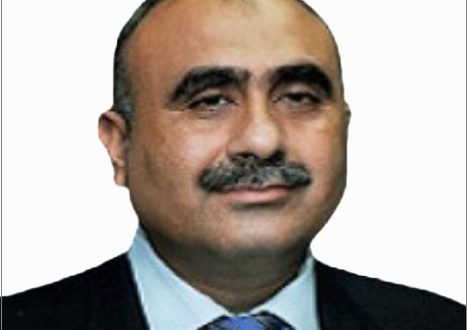
KARACHI July 2,2026: Pakistan’s electricity consumers continue to bear the cost of years of mismanagement and delayed reforms in the power sector, Khurram Ijaz, Secretary General of the Businessmen Panel Progressive (BMPP) and former Vice President of the FPCCI, said on Tuesday.
Referring to the Auditor General of Pakistan (AGP) Audit Report 2025-26, he urged the federal government to immediately review the Debt Service Surcharge (DSS). He argued that the Rs3.23 per unit levy shifts the burden of institutional failures onto households and businesses.
“The audit clearly shows that instead of fixing the power sector, the government continues to pass the cost of its failures on to consumers,” he said.
Ijaz said the audit exposes a wide gap between the government’s reform commitments and the sector’s actual performance. Although the National Electricity Policy and National Electricity Plan (2023-27) promised a competitive and financially sustainable market, the sector recorded average deficits of 2.8% of GDP between FY2014 and FY2024.
He noted that circular debt declined from Rs2.39 trillion in June 2024 to Rs1.61 trillion in June 2025. However, the audit found that the reduction resulted mainly from commercial borrowing and fiscal support rather than structural reforms.
“Borrowing to reduce circular debt is not a reform. It only delays the problem while consumers continue paying higher electricity bills,” he added.
The audit also highlighted persistent operational weaknesses. Public-sector distribution companies (DISCOs) recorded Rs265 billion in transmission and distribution losses and another Rs132 billion in poor recoveries during FY2024-25.
According to Ijaz, these figures prove that the root causes of the power sector crisis remain unresolved.
“Consumers pay more every year, yet electricity theft, technical losses, weak recoveries and poor governance continue. This cannot be called reform,” he said.
He also questioned the fairness of charging the DSS to K-Electric consumers, despite the utility not contributing to the country’s circular debt. He said the issue raises serious concerns about transparency, fairness and consumer rights.
The AGP report further showed that transmission and distribution losses rose to 17.55% in FY2024-25, well above NEPRA’s approved target of 11.77%. Ijaz said electricity theft, faulty meters, inaccurate billing and delayed recoveries continue to drain billions of rupees while honest consumers face rising tariffs.
He added that frequent overbilling complaints have further weakened public confidence in power distribution companies.
Ijaz also criticized Pakistan’s outdated transmission network, saying it led to nearly Rs1.9 trillion in capacity payments during FY2024-25. He said delays in upgrading the grid have prevented the country from fully utilizing available power generation.
While welcoming the proposed 800MW market allocation and wheeling initiative, he said the measure remains too limited to create real competition or reduce dependence on the single-buyer electricity model.
He stressed that Pakistan’s manufacturing sector cannot compete globally while electricity prices remain inflated by inefficiencies instead of actual production costs.
Ijaz urged the government to review the electricity tariff regime, reconsider the Debt Service Surcharge, strengthen DISCO governance, crack down on power theft, modernize transmission infrastructure, improve billing systems and encourage greater private-sector participation.
“Pakistan cannot continue asking consumers and industries to finance inefficiency. Only structural reforms, not temporary fiscal measures, can solve the power sector’s problems,” he said.