The Biz Update One of Pakistan's Most Reliable Business News Website

Related Articles

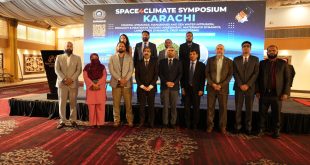

KARACHI ,May 14 , 2026 :Pakistan’s Ambassador to China, Khalil Hashmi, said Pakistan and China have made strong progress in bilateral economic cooperation. Over the past two years, both sides signed more than 300 Memorandums of Understanding (MoUs) and over three dozen joint venture agreements. Together, these deals are worth more than US$13 billion.
He shared these remarks during a meeting at the Karachi Chamber of Commerce and Industry (KCCI). The meeting took place during a visit by a 70-member delegation from China’s IBI Group on Monday.
Ambassador Hashmi said MoUs serve as the first step toward long-term cooperation. However, he added that Pakistan has now built a strong system to turn these MoUs into real business agreements. As a result, nearly 30 percent of MoUs now convert into formal contracts, which shows improved execution and follow-up.
During the meeting, KCCI and China’s IBI Group signed a Memorandum of Understanding. They agreed to strengthen cooperation in the digital economy and industrial development.
KCCI President Rehan Hanif and IBI Group Director Ms. Liu Junzhai signed the agreement. Several senior representatives from both sides attended the ceremony, including Chairman Businessmen Group Zubair Motiwala and other KCCI office bearers along with the Chinese delegation.
Meanwhile, Ambassador Hashmi highlighted new opportunities in energy and technology. He said Pakistan is in talks with CATL, a leading global battery manufacturer that works on lithium-ion and sodium-based technologies.
He added that Pakistan is encouraging investment and cooperation in this sector. He also expressed hope that progress could take place during the Prime Minister’s upcoming visit to China.
Moreover, he noted that global markets are shifting from lithium-ion to sodium-based battery technology. He said Pakistan has rich raw materials needed for these industries. Therefore, the country aims to gain a first-mover advantage by attracting investment in advanced battery production and new energy technologies.
Speaking on the occasion, IBI Group Director Ms. Liu Junzhai said Karachi has strong potential to become a regional hub for digital trade and smart industrial growth. She pointed to its strategic maritime location, strong industrial base, and active business community.
She added that Karachi is not only Pakistan’s commercial capital but also a key maritime gateway in South Asia. It plays a central role in industrial, financial, and global trade activity.
In addition, she said Karachi represents both the present and future of Pakistan. She also said IBI Group values its long-term partnership with KCCI.
Ms. Liu further explained that IBI Group is a leading Chinese industrial internet and digital trade platform listed on the Shanghai Stock Exchange. She said the company has worked in industrial digitalization and e-commerce for many years and continues to grow rapidly.
Chairman Businessmen Group Zubair Motiwala said the visit reflects strong friendship and growing economic ties between Pakistan and China. He said both countries now share a model of cooperation based on trust, shared growth, and long-term partnership.
He added that the business community in Karachi appreciates Chinese confidence in Pakistan’s economy. He also said the new MoU will open doors for investment, trade promotion, technology transfer, and industrial cooperation.
Motiwala noted that bilateral trade continues to grow despite global uncertainty. It now stands between US$23 billion and US$28 billion.
However, he expressed concern over the widening trade imbalance. Pakistan imports far more from China than it exports.
Therefore, he stressed the need to shift from simple trade to joint production, industrial cooperation, technology transfer, value addition, and export-focused investment.
He also said KCCI remains committed to supporting Chinese investors and improving the ease of doing business in Pakistan. He described CPEC as a flagship project of China’s Belt and Road Initiative that has transformed Pakistan’s infrastructure and energy sectors.
Looking ahead, he said the next phase of CPEC should focus on industrial cooperation, special economic zones, manufacturing relocation, renewable energy, agriculture modernization, and the digital economy.
He also highlighted renewable energy trends. He said Pakistan’s industrial sector is shifting quickly toward clean energy due to rising costs and energy challenges. He added that Pakistan is becoming one of the fastest-growing solar markets, supported by Chinese technology and equipment.
He further noted that Chinese expertise in solar, wind, battery storage, smart grids, and energy systems can support Pakistan’s clean energy transition.
On agriculture, he said the sector remains the backbone of Pakistan’s economy. He added that strong opportunities exist to expand exports of rice, halal meat, seafood, fruits, sesame, dairy products, and processed food to China.
Finally, KCCI President Rehan Hanif welcomed the delegation. He said it was a major milestone that IBI Group chose Pakistan for the launch of its Digital Economy Headquarters.
He added that Pakistan offers strong potential for digital transformation, smart manufacturing, AI-driven trade, and modern supply chains. He also said Karachi provides an ideal gateway for Chinese investors seeking long-term, sustainable partnerships.