The Biz Update One of Pakistan's Most Reliable Business News Website
Related Articles



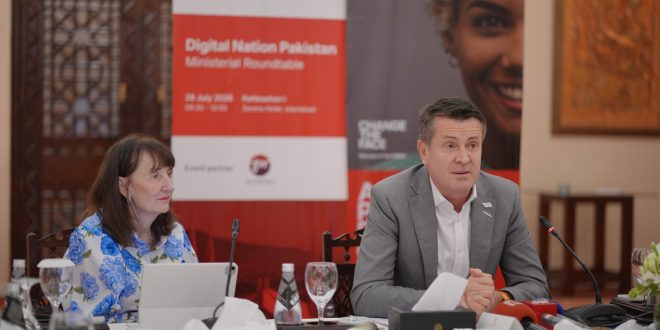
ISLAMABAD, July 29, 2026: The GSMA brought together senior representatives from Pakistan’s federal and provincial governments, Gilgit-Baltistan, regulators, industry, and development partners to accelerate the country’s Digital Pakistan 2030 agenda.
During the GSMA Digital Nation Pakistan Ministerial Roundtable, participants discussed practical steps to strengthen Pakistan’s digital transformation and build on the country’s recent progress.
The roundtable united federal ministries, all four provincial governments, Gilgit-Baltistan, the national regulator, mobile industry leaders, and international development partners. Their broad participation underscored the need for coordinated action to achieve Digital Pakistan 2030.
Meanwhile, GSMA released a new discussion paper titled “Digital Pakistan 2030: Building Momentum for Sustainable Investment, Trust and Inclusive Growth.” The report highlighted Pakistan’s progress in spectrum policy, mobile internet adoption, smartphone penetration, women’s digital inclusion, cybersecurity, and public-private collaboration.
The paper also identified five strategic priorities to sustain digital growth. These include strengthening investment certainty, accelerating digital inclusion, preparing infrastructure for the AI economy, building trusted digital infrastructure, and improving coordination among government, industry, and development partners.
Commenting on the initiative, Julian Gorman, Head of Asia Pacific at GSMA, said Pakistan has built strong foundations for digital growth over the past year. He added that continued collaboration among government, industry, and development organizations will be critical to maintaining that momentum and delivering Digital Pakistan 2030.
Furthermore, GSMA emphasized the need to expand digital inclusion through affordable internet access, improved digital skills, rural connectivity, and greater participation of women in the digital economy. The report also called for investment in 5G readiness, fibre networks, data centres, energy resilience, and future spectrum planning to support the country’s AI-driven future.
In addition, the paper urged policymakers to strengthen cybersecurity, digital identity systems, child online safety, anti-scam measures, and broader digital trust frameworks to create a secure digital ecosystem.
The report concluded with a Digital Pakistan 2030 Action Agenda, outlining five shared actions to guide future collaboration. These include creating investment certainty, expanding digital inclusion, strengthening trusted digital infrastructure, preparing for the AI economy, and improving national coordination.
The ministerial roundtable ended with a joint Call to Action, reaffirming the commitment of government, industry, and development partners to accelerate Pakistan’s digital transformation through sustained investment, stronger collaboration, and coordinated implementation.