The Biz Update One of Pakistan's Most Reliable Business News Website
Related Articles



ISLAMABAD, September 5, 2026: China’s meteorological technology is helping Pakistan strengthen its weather forecasting and early warning capabilities, enabling communities to better prepare for floods, heavy rainfall and other extreme weather events.
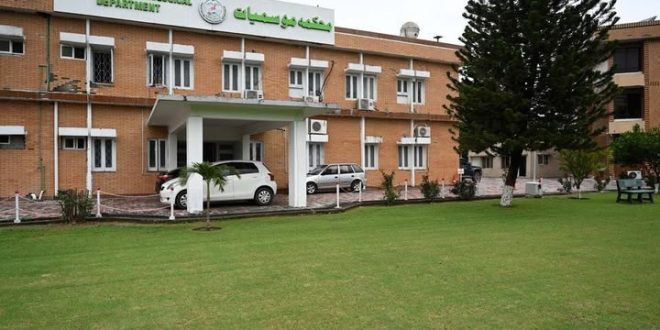
The cooperation between the China Meteorological Administration (CMA) and the Pakistan Meteorological Department (PMD) includes the use of MAZU, a Chinese artificial intelligence-powered meteorological early warning system.
The system is helping Pakistani meteorologists combine weather observations, numerical prediction models, satellite information and artificial intelligence on a single platform. This allows them to analyze weather conditions more efficiently and issue faster and more informed warnings.
For farmers, timely weather information can help protect crops and reduce financial losses.
Riaz Hussain, a farmer from Talagang district in Punjab, said he avoided major losses during this year’s wheat harvest by closely following weather forecasts and advisories issued by the PMD.
Hussain said he lives in a rain-fed area and had previously suffered losses after rain disrupted harvesting activities. This year, however, he adjusted his farming activities according to weather advisories and managed to protect much of his crop.
His experience has encouraged other farmers in the area to seek weather guidance during different stages of farming, including sowing and harvesting.
Weather warnings are also helping communities living in flood-prone areas.
Rustom Baloch, a resident of Naseerabad district in Balochistan, received an early warning from the PMD that his home was located in a flood-prone area. He evacuated his family and moved valuable belongings to a safer location before floodwaters reached the area.
Baloch said a flash flood later struck the area. Although he suffered financial losses, the early warning gave his family valuable time to take precautionary measures.
According to Furrukh Bashir, director of the Research and Development Division of the PMD, cooperation with the CMA has strengthened Pakistan’s forecasting and early warning capabilities.
He said MAZU provides an integrated platform that brings together different sources of weather information, helping meteorologists make faster and better-informed decisions.
The system also provides access to international forecasting models while integrating information collected by the PMD. This gives Pakistani meteorologists a broader view of developing weather conditions.
MAZU has been deployed in more than 40 countries, including Pakistan. Pakistani meteorologists have received training in China to operate the system, while Pakistani scientists have also participated in its development. The system has been in use in Pakistan for around one and a half years.
Acting Director General of the PMD Zaheer Ahmad Babar said China’s support was helping developing countries improve their meteorological knowledge and capabilities.
He said stronger early warning systems can help vulnerable communities take preventive measures, protect lives and livelihoods and build resilience against extreme weather events.
For Pakistan, where agriculture depends heavily on weather conditions and many communities remain exposed to floods, timely forecasts can make a significant difference.
An early warning can give local authorities time to prepare communities, allow families to move to safer locations and help farmers delay harvesting until dangerous weather conditions pass.
The cooperation between China and Pakistan is also strengthening scientific exchanges, training and joint development in the meteorological sector.