The Biz Update One of Pakistan's Most Reliable Business News Website
Related Articles


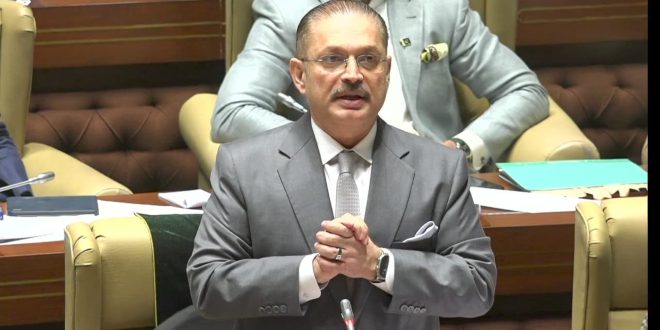
KARACHI, September 3, 2026: Sindh Senior Minister and Provincial Minister for Information, Transport and Mass Transit Sharjeel Inam Memon has said that any decision regarding the future, boundaries or division of Sindh must be taken by the elected Sindh Assembly through the constitutional process.
Speaking in the Sindh Assembly during a debate on an adjournment motion presented by Nisar Ahmed Khuhro, Memon described the proceedings as historically significant. He said the complete debate would be published in book form, including speeches and positions from both government and opposition benches, to preserve it as a historical record for future generations.
Memon said the Pakistan People’s Party (PPP) and the Sindh government had a clear position on the issue of new provinces. He referred to PPP Chairman Bilawal Bhutto Zardari’s position that decisions on new provinces should be taken by the relevant provincial assemblies.
He said the Sindh Assembly should decide any matter concerning Sindh, while the Punjab Assembly, Khyber Pakhtunkhwa Assembly and Balochistan Assembly should have the same authority regarding their respective provinces.
Referring to Article 239(4) of the Constitution, Memon said constitutional matters relating to changes in provincial boundaries should be addressed through elected assemblies rather than television talk shows, public rallies, surveys or referendums.
“If the future of Sindh is to be decided, it should be decided on the floor of the Sindh Assembly,” he said.
Memon said the Sindh Assembly had passed several resolutions in the past in support of the unity of Sindh and indicated that another resolution on the issue was expected following the current debate.
He stressed that the people of Sindh’s attachment to their province was compatible with their commitment to Pakistan. He said Pakistan’s sovereignty, integrity and constitutional framework were non-negotiable, while Sindh’s identity and its place within Pakistan were equally important.
Addressing the debate over new provinces, Memon urged political parties to avoid using sensitive issues for political or linguistic purposes. He said the question of dividing Sindh should not be framed as a conflict between Sindhi- and Urdu-speaking communities.
He argued that attempts to create divisions on linguistic grounds were not in the interest of the people of Sindh. According to him, the people of the province should reject politics based on linguistic differences and focus on unity and mutual respect.
Memon also referred to statements made by MQM leadership at different times regarding the division of Sindh and the creation of a new province. He said his remarks were intended to place the current debate in the context of past political positions rather than for political point-scoring.
He maintained that Urdu- and Sindhi-speaking communities had strong bonds of friendship and brotherhood. He said the issue of Sindh’s unity should not be associated with any single political party or linguistic group, arguing that people from different communities shared an interest in keeping the province united.
Memon also stressed that Urdu was Pakistan’s national language and said linguistic differences should not be used to separate communities living in Sindh. He called for greater brotherhood and mutual respect among people speaking different languages.
Turning to governance and public concerns, he said political debate should focus more on employment, public services and practical solutions to people’s problems.
He said administrative and governance weaknesses should be addressed through institutional reforms rather than by creating new provinces or administrative units. He argued that creating a new administrative unit could not automatically resolve problems within an existing institution.
Memon also questioned the selective discussion of new provinces, pointing to resolutions passed by the Punjab Assembly in 2012 regarding the creation of South Punjab and restoration of Bahawalpur province.
He said the same constitutional principle should apply to all provinces. If new provinces were considered a constitutional matter, he argued, the process should also address provinces where relevant resolutions had already been passed.
He reiterated that the future of each province should be determined by its elected assembly under the Constitution and that the same procedure should be followed across Pakistan.
Memon concluded by calling for national unity and greater harmony among Pakistan’s diverse communities. He described Pakistan as a country of different provinces, languages, cultures and religions and said its strength lay in preserving unity within this diversity.
He cited Sindh, particularly Karachi, as an example of people from different linguistic and cultural backgrounds living together. He said the people of Sindh had historically demonstrated tolerance and brotherhood and should continue to reject politics based on linguistic hatred and division.