The Biz Update One of Pakistan's Most Reliable Business News Website
Related Articles



KARACHI, June 9, 2026: Visa has released its annual Stay Secure 2026 study in Pakistan, revealing that consumers are rapidly adopting artificial intelligence (AI) for shopping. However, trust remains a key concern when it comes to AI-driven transactions.The study, conducted by Wakefield Research, shows that 82% of consumers in Pakistan have used AI-powered tools while shopping online. Most commonly, they use AI to compare prices (56%), check product reviews (53%), and find gift ideas (47%).
As a result, consumers increasingly rely on technology to improve their shopping experience. In fact, 93% of respondents say AI and other digital tools make online shopping faster and easier. Meanwhile, 55% discover new brands and retailers through online shopping platforms.
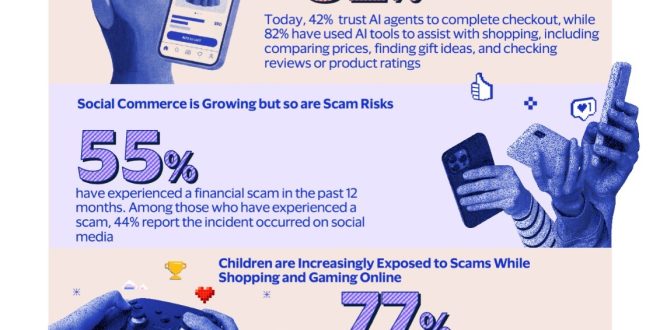
Despite this growing adoption, consumers remain cautious about AI completing purchases on their behalf. Currently, only 42% trust AI agents to handle the checkout process. Therefore, building trust remains critical as AI-driven commerce expands.
At the same time, consumers increasingly view AI as a tool to combat fraud. Around 65% believe AI helps them identify scams more easily today. Moreover, 87% expect AI to play a major role in fraud prevention in the future.
The study also highlights the rapid growth of social commerce in Pakistan. According to the findings, 82% of consumers have purchased products directly through social media platforms.
However, the rise of social commerce has also increased fraud risks. More than half of respondents (55%) report experiencing a financial scam during the past year. Among scam victims, 44% say the fraud occurred through social media platforms, making them the most common source of online scams.
Meanwhile, concerns about children’s online safety continue to grow. The survey found that 77% of consumers believe children struggle to recognize online scams. In addition, 33% say a child they know has fallen victim to a scam while gaming or shopping online.
The study also notes that digital payment access among children is increasing. Nearly 44% of Pakistani parents say their children can access mobile payment applications or digital wallets.
Furthermore, consumers expect institutions to take the lead in protecting them from fraud. Nearly 49% believe payment providers and online marketplaces should bear primary responsibility. Meanwhile, 36% point to government regulators, while 31% place responsibility on banks and financial institutions. In contrast, only 13% believe consumers themselves should carry the primary burden.
Consumers also want stronger security measures. More than half (51%) say real-time fraud alerts from banks or payment apps would increase their confidence. Similarly, 33% feel more secure when they see a familiar and trusted payment logo during checkout.
Commenting on the findings, Visa’s Senior Vice President and Group Country Manager for North Africa, Levant, and Pakistan, Leila Serhan, said consumers across Pakistan are embracing AI and digital commerce. However, she noted that trust, security, and control remain essential as digital ecosystems evolve.
She added that while consumers welcome AI-powered convenience, many still hesitate to allow AI to complete purchases independently. Therefore, Visa continues to invest in secure-by-design technologies and real-time protections to support the next generation of digital commerce.
The Stay Secure 2026 study surveyed 5,800 adults across 17 countries in Central and Eastern Europe, the Middle East, and Africa (CEMEA), including Pakistan. The research was conducted between January and February 2026.